 minipod.io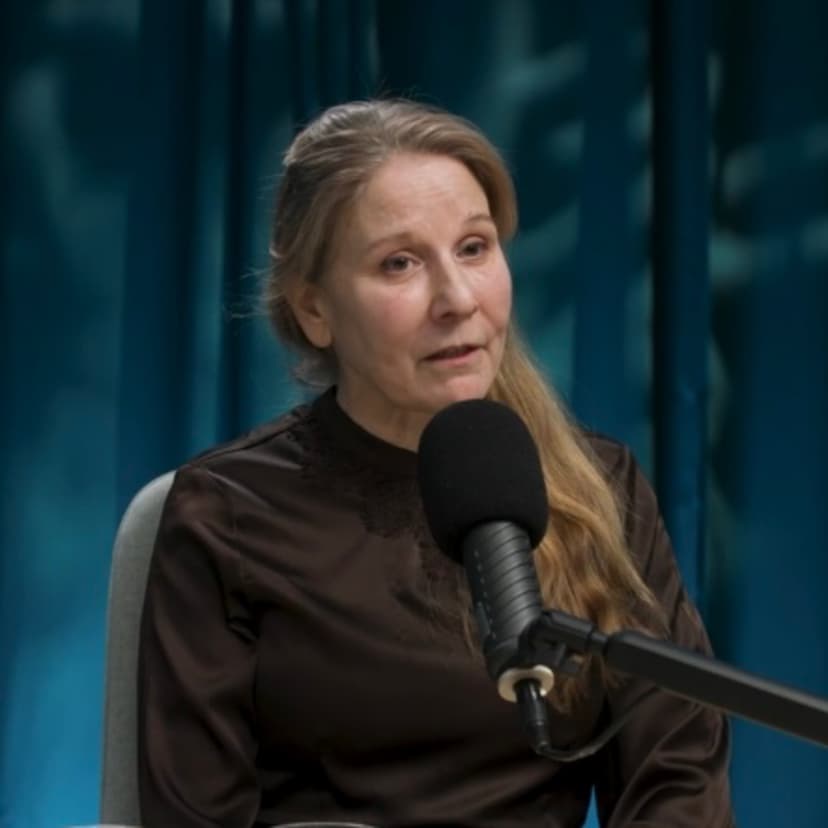
#42. EMF på celleplan. Hvad gør det ved os? En samtale med Vibeke Frøkjær.
Episode Snapshot
In this podcast episode, the host revisits the topic of electromagnetic radiation from mobile phones and wireless technology, following a previous episode that sparked many listener questions about...
Quick Summary
Key Points
- The podcast revisits the topic of "stråling" (radiation), specifically from mobile phones and wireless technology, after a previous episode generated significant listener interest and questions.
- The guest, a researcher and veterinarian with expertise in epidemiology and ethics, became concerned about radiation effects after personal experiences and began investigating in 2011, co-founding a council for safe telecommunications.
- He highlights a major issue: Danish health authorities rely on advice from industry-funded researchers, which he argues creates a conflict of interest and may violate laws requiring unbiased scientific guidance.
- Research on insect decline, including a major German study showing a 30% drop in insect biomass in nature parks from 2005-2007, correlates temporally with the rollout of 3G and 4G networks, suggesting wireless radiation as a possible cause.
- The guest expresses deep concern for children's health and environmental biodiversity, noting that insect declines—especially in common species like flies and mosquitoes—threaten entire food chains, and he calls for more open investigation into alternative explanations.
Summary
In this podcast episode, the host revisits the topic of electromagnetic radiation from mobile phones and wireless technology, following a previous episode that sparked many listener questions about the nature and risks of radiation exposure. The guest, a Danish researcher and veterinarian with a background in epidemiology and ethics, explains how he became involved in this issue after noticing personal health effects when moving to an office filled with wireless devices around 2010. His curiosity led him to investigate existing research, and he was shocked to find a substantial body of evidence indicating biological effects from radiation, including oxidative stress at the cellular level, as demonstrated by researcher Sienette Kvæg. However, he notes that much of this research has been suppressed or criticized, partly due to industry influence. The guest co-founded the Council for Safe Telecommunications in 2011 to advocate for public protection based on the precautionary principle.
A central theme is the guest's critique of how Danish health authorities handle radiation risks. He argues that the authorities rely on advice from a small group of researchers who have ties to the telecommunications industry, which he claims creates a conflict of interest. According to him, Danish law requires that advisors to regulatory bodies be free from such conflicts, making the current arrangement potentially illegal. He mentions that a complaint has been filed with the Ombudsman over this issue. The guest emphasizes that while many independent researchers worldwide have documented risks, industry-funded studies often downplay them, leading to a lack of protective measures.
The conversation then shifts to environmental impacts, particularly the dramatic decline in insect populations. The guest references a landmark German study from 2017 that found a 30% drop in insect biomass in nature parks between 2005 and 2007, a period coinciding with the rollout of 3G and 4G networks in rural areas. He points out that common explanations like climate change, habitat loss, or agricultural practices could not account for the decline in protected areas, where conditions were actually improving. Instead, he suggests that wireless radiation from mobile towers may be a key factor, as insects are highly sensitive to electromagnetic fields. Studies show that insects with larvae above ground are more affected than those with underground larvae, supporting this hypothesis. The guest warns that insect loss threatens entire ecosystems, as insects are foundational to food chains, affecting birds, reptiles, and other wildlife. He calls for more research and open-mindedness, urging authorities to investigate all possible causes of biodiversity loss, including radiation, rather than dismissing it without evidence.