 minipod.io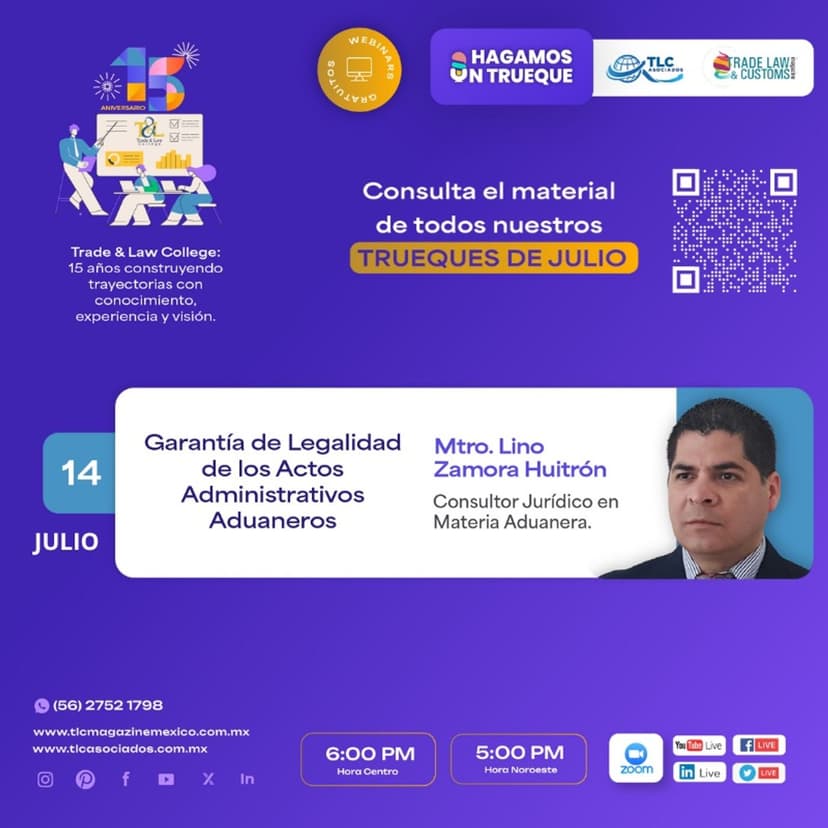
607 Garantía de Legalidad de los Actos Administrativos Aduaneros
Episode Snapshot
The transcription begins with promotional content for Honda, highlighting offers on the Civic and HR-V and the brand's recognition as the best value of 2025 by Kelley Blue Book. This is followed by an...
Quick Summary
Key Points
- Honda is offering promotions on the Civic and HR-V, touted as the best-value brand for 2025 by Kelley Blue Book.
- Sherwin-Williams introduces Emerald Symmetry interior paint, featuring zero VOCs, ultra-smooth application, and excellent durability.
- A webinar is scheduled for July 16 from 9 AM to 12 PM (Pacific Time) to optimize Annex 30 compliance for companies under the IMMEX program.
- The event "Hagamos un Trueque" features a presentation by Master Lino Zamora on legal guarantees in customs administrative acts.
- Master Lino Zamora is a customs law consultant, university professor, and former head of the legal area at the SAT in Tijuana, with expertise in customs and international trade.
- The presentation covers the 50 customs offices in Mexico, their organizational structure, and key legal concepts like faculties, attributions, and functions.
- Article 16 of the Mexican Constitution is emphasized as foundational for all customs administrative acts, requiring proper justification and motivation.
- Customs officials must have a valid "constancia" (certification) to exercise specific powers; without it, their actions may be considered unlawful.
- The discussion highlights the importance of ensuring that customs procedures, such as inspections or seizures, comply with legal requirements to protect the rights of individuals and companies.
Summary
The transcription begins with promotional content for Honda, highlighting offers on the Civic and HR-V and the brand's recognition as the best value of 2025 by Kelley Blue Book. This is followed by an advertisement for Sherwin-Williams' new Emerald Symmetry interior paint, which promises zero VOCs, smooth application, and high coverage. The main segment transitions into a webinar announcement for July 16, focusing on optimizing Annex 30 compliance for companies under the IMMEX program. The webinar, led by Master Oscar Navarre, aims to teach inventory control systems, error identification, risk reduction, and audit preparation for customs-related processes.
The core of the transcription is a detailed presentation by Master Lino Zamora during the "Hagamos un Trueque" event, celebrating 15 years of the program. Zamora, a seasoned customs law consultant and former SAT legal head in Tijuana, discusses legal guarantees in customs administrative acts. He begins by outlining Mexico's 50 customs offices (19 northern borders, 2 southern borders, 17 maritime, and 12 interior) and their oversight by the General Customs Administration, which includes directorates for operations, investigations, modernization, and technology.
Zamora clarifies key legal concepts: faculties are powers granted by law to public servants to perform administrative acts; attributions are possibilities enabling authorities to fulfill their purposes; and functions are specific duties, such as revenue collection and monitoring goods. He stresses the importance of Article 16 of the Mexican Constitution, which mandates that any act of molestia (e.g., inspections, seizures) must be issued by a competent authority, in writing, and properly justified and motivated. This constitutional provision, along with Article 38 of the Federal Tax Code, ensures the legality of customs procedures.
Zamora emphasizes that customs officials must hold a valid "constancia" (certification) specifying their authorized powers. Without this document, their actions—such as detaining goods or imposing fines—may be invalid. He warns that many companies and authorities overlook these requirements, leading to procedural errors. The presentation encourages businesses to scrutinize customs acts for compliance, as mistakes by authorities can provide legal advantages. The session concludes with a call to ensure all administrative acts respect legal guarantees, protecting the security of individuals and companies involved in international trade.