 minipod.io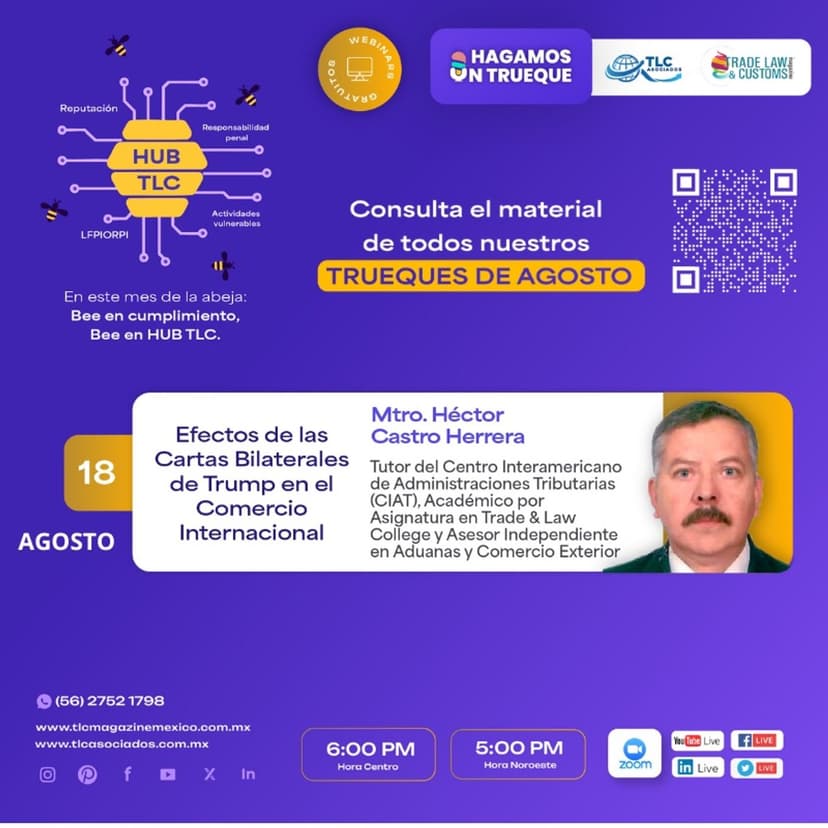
617 - Efectos de las Cartas Bilaterales de Trump en el Comercio Internacional
Episode Snapshot
The transcription begins with a promotional advertisement for Kia’s Summer Sticker Sales event, highlighting special offers on vehicles such as the Sorento, Sportage, Carnival, and Niro Hybrid. The...
Quick Summary
Key Points
- The Kia Summer Sticker Sales event promotes specially tagged vehicles (Sorento, Sportage, Carnival, Niro Hybrid) with a 10-year/100,000-mile limited powertrain warranty.
- A separate segment introduces Dr. Maxime Carbajal for a discussion on proposed changes to Mexico’s customs law, emphasizing the need for clarity, innovation, and alignment with international standards.
- Dr. Carbajal outlines 21 specific proposals for a new customs law, including strengthening international data obligations, integrating subletorial laws, defining customs agents as professionals, and simplifying regulations for authorized economic operators.
- Key criticisms include excessive subjectivity in authority decisions, over-regulation of fiscal regimes, and the need to update customs agent roles to cover the full logistics chain.
- The transcript also contains unrelated advertisements for Honda vehicles and Capital One banking, which interrupt the main content.
Summary
The transcription begins with a promotional advertisement for Kia’s Summer Sticker Sales event, highlighting special offers on vehicles such as the Sorento, Sportage, Carnival, and Niro Hybrid. The promotion emphasizes a 10-year/100,000-mile limited powertrain warranty, positioning the purchase as a lasting gift for summer. The ad includes a call to action for more details and warranty information.
The main body of the transcript shifts to a discussion led by Dr. Maxime Carbajal, who is introduced as an expert on customs and legal matters. He addresses proposed changes to Mexico’s customs law, critiquing the lack of transparency and public access to draft legislation. Dr. Carbajal argues that any new law must be clear, precise, technical, and inclusive, while incorporating modern tools like artificial intelligence to reduce discretionary authority. He emphasizes the importance of aligning national law with international treaties and standards, particularly those from the World Trade Organization and the Kyoto Convention.
Dr. Carbajal presents 21 specific proposals for a new customs law. Key points include: strengthening the obligation to follow international data and criteria; integrating subletorial laws such as the Fiscal Code, Foreign Trade Law, and Quality Infrastructure Law; defining customs agents as professionals with expanded roles in the logistics chain; including international terminology and concepts like customs territory; and simplifying regulations for authorized economic operators and fiscal regimes. He also recommends increasing the number of days goods can remain in fiscal warehouses, clarifying the responsibility of customs agents, and eliminating subjective interpretations by authorities. Additionally, he advocates for re-introducing the figure of the substitute customs agent under a new name (“customs agent in relief”) to improve operational flexibility.
Throughout the discussion, Dr. Carbajal criticizes current over-regulation and the excessive power of the Tax Administration Service (SAT), suggesting that more faculties should be transferred to the National Customs Agency (ANAM). He highlights the need for clearer rules on domicile verification for foreign providers and the elimination of estimated pricing contrary to international trade agreements. The transcript is interspersed with unrelated advertisements for Honda vehicles and Capital One banking services, which disrupt the flow of the main content. Despite these interruptions, the core of the transcription provides a detailed, expert-driven critique and set of recommendations for reforming Mexico’s customs legal framework.