 minipod.io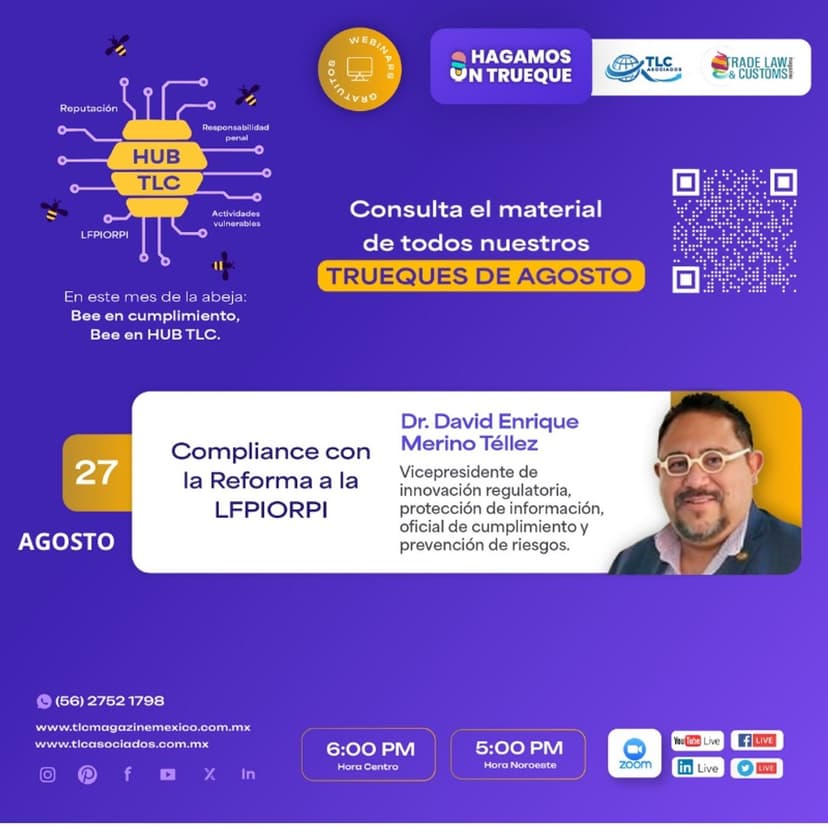
620 - Reforma a la LFPIORPI
Episode Snapshot
The transcription begins with an advertisement for Weight Watchers Med Plus, a program tailored for individuals taking GLP-1 medications. It addresses common challenges like managing side effects,...
Quick Summary
Key Points
- Weight Watchers Med Plus is a program designed to support individuals using GLP-1 medications by managing side effects, providing food plans, and offering expert guidance to enhance weight loss.
- Weight Watchers Core Plus emphasizes real coaches, workshops, and tools to help build lasting habits, with clinical evidence showing members lose 3.5 times more weight than those going it alone.
- The transcription includes a Spanish-language conference on Mexico’s anti-money laundering reform (Ley FPRIP), presented by Dr. David Merino, focusing on new obligations for vulnerable activities.
- Key reform changes include expanding vulnerable activities to cover real estate development and virtual assets, aligning with international FATF standards.
- The reform imposes stricter compliance requirements, similar to banking regulations, with a focus on risk management and the appointment of a compliance officer (representante de cumplimiento).
Summary
The transcription begins with an advertisement for Weight Watchers Med Plus, a program tailored for individuals taking GLP-1 medications. It addresses common challenges like managing side effects, quieting food noise, and breaking through weight loss plateaus. The program offers expert guidance, food plans, and support to help manage GLP-1 side effects while providing access to medication. The ad emphasizes that Weight Watchers Core Plus, with real coaches and tools, leads to significantly better results—members losing 3.5 times more weight than those who attempt weight loss alone, based on a clinical trial.
The transcription then shifts to a Spanish-language conference led by Dr. David Merino, an expert in regulatory innovation and compliance. The conference focuses on Mexico’s recent reform to the Federal Law for the Prevention and Identification of Operations with Resources of Illicit Origin (FPRIP) and related criminal code changes. Dr. Merino explains that the reform, approved on June 30, 2025, after a six-year legislative process, is crucial for Mexico to meet international standards set by the Financial Action Task Force (FATF). He outlines the three stages of money laundering—placement, layering, and integration—and emphasizes that the reform treats vulnerable activities almost like banking operations, imposing significant new obligations.
Key changes include the redefinition of vulnerable activities, particularly in real estate development. Previously vague language about “real estate development services” has been clarified: construction and brokerage remain under one fraction, while a new fraction specifically covers the receipt of resources for real estate development projects intended for sale or rent. This is considered a new vulnerable activity, as it targets the reception of funds for development, not just sales. Additionally, virtual asset activities are now required to report operations involving Mexican citizens, aligning with FATF’s “travel rule.” The reform also introduces a mandatory compliance officer role (representante de cumplimiento) for vulnerable activity entities, distinct from financial sector compliance officers, and emphasizes risk management to reduce inherent risks to residual levels.
Dr. Merino acknowledges the implementation challenges, noting that secondary legislation, regulations, and formats are still pending. He highlights that the reform aims to strengthen Mexico’s financial system and national economy by combating money laundering, though it may be costly and complex for businesses. The conference concludes with an interactive Q&A session, where participants seek clarification on new obligations, such as whether participation in real estate development through capital contributions falls under the new rules. Overall, the conference provides a comprehensive overview of the reform’s scope, implications, and the need for careful compliance to meet international standards.