 minipod.io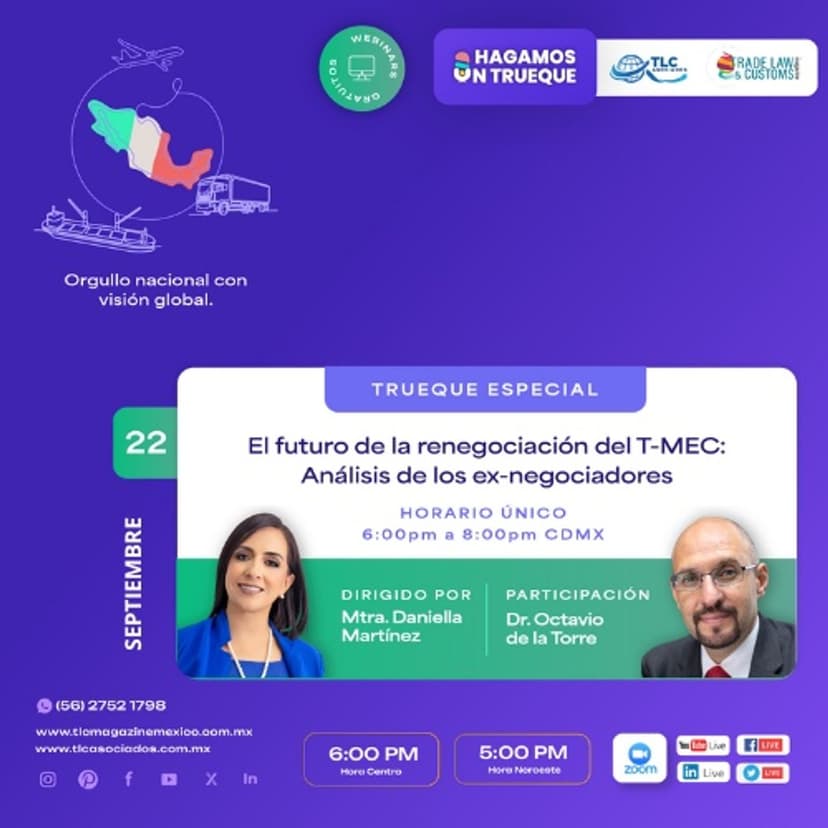
623 - El futuro de la renegociación del T-MEC: Análisis de los ex-negociadores
Episode Snapshot
The transcription captures a panel discussion on the future of the United States-Mexico-Canada Agreement (USMCA), focusing on the upcoming review process and potential renegotiation. The conversation...
Quick Summary
Key Points
- The transcription begins with a road safety message about giving buses space during turns, but quickly shifts to a discussion about the future of the USMCA (T-MEC) trade agreement.
- Key speakers include Daniela, Guillermo Malpica, Dr. José Manuel Vargas, Ricardo Aranda Girard, and others, focusing on the upcoming review and potential renegotiation of the USMCA.
- The review is mandated by Article 34.7 of the USMCA, which requires a joint review every six years; if agreed, the treaty extends for 16 more years, but there are concerns it could become a full renegotiation.
- Speakers highlight the aggressive trade policy of the Trump administration, including tariff threats and unilateral actions, which may pressure Mexico and Canada.
- Topics of concern include stricter rules of origin (especially for the automotive sector), intellectual property, customs facilitation, and the impact of Mexican domestic reforms (e.g., energy laws) on trade commitments.
- The panel notes that the US is closely monitoring Mexican legislative changes but may only react once economic impacts are felt, as seen with glyphosate and transgenic corn disputes.
- Public consultations are underway in Mexico, the US, and Canada to gather input, but the US lacks broad Trade Promotion Authority (TPA) for a full renegotiation.
- The discussion emphasizes the need for Mexico to prepare for multiple scenarios: a simple review, a limited negotiation, or a comprehensive renegotiation, given the unpredictable nature of US trade policy.
Summary
The transcription captures a panel discussion on the future of the United States-Mexico-Canada Agreement (USMCA), focusing on the upcoming review process and potential renegotiation. The conversation begins with a brief road safety message about giving buses space during turns, but quickly transitions into a detailed analysis of trade policy. The main speakers—Daniela, Guillermo Malpica, Dr. José Manuel Vargas, and Ricardo Aranda Girard—discuss the implications of the USMCA’s Article 34.7, which mandates a joint review every six years. If the review is successful, the treaty extends for 16 years, but if not, negotiations could continue until year 16. However, panelists express concern that the review may escalate into a full renegotiation, especially given the aggressive trade stance of the Trump administration.
Key points of discussion include the unpredictable nature of US trade policy, with recent tariff threats and unilateral actions creating uncertainty. The panel notes that the US has already sent signals of a more confrontational approach, as seen in letters from USTR and the July 2024 threat of tariffs. The speakers highlight several critical issues: stricter rules of origin, particularly for the automotive sector, which could require higher regional value content (up to 85%) and domestic content requirements; intellectual property protections; and customs facilitation. They also discuss the impact of Mexican domestic reforms, such as energy laws and the proposed customs law, which may violate USMCA commitments. The panel suggests that the US may initially monitor these changes but will only intervene once economic impacts materialize, as seen in the glyphosate and transgenic corn disputes.
The discussion underscores the importance of preparation for multiple scenarios—a simple review, a limited negotiation, or a comprehensive renegotiation. Mexico has already begun public consultations and sectoral preparations, but the US lacks broad Trade Promotion Authority (TPA), limiting the scope of any renegotiation. The speakers emphasize that Mexico must use the review process to defend its interests, particularly in rules of origin and customs facilitation, while also leveraging the USMCA to counter domestic reforms that could harm trade. The panel concludes that the coming months will be intense, requiring step-by-step strategies to navigate the complex and evolving trade landscape. Overall, the transcription provides a comprehensive overview of the challenges and opportunities facing the USMCA as it approaches its first major review, with a focus on Mexico’s preparedness and the need for proactive engagement.